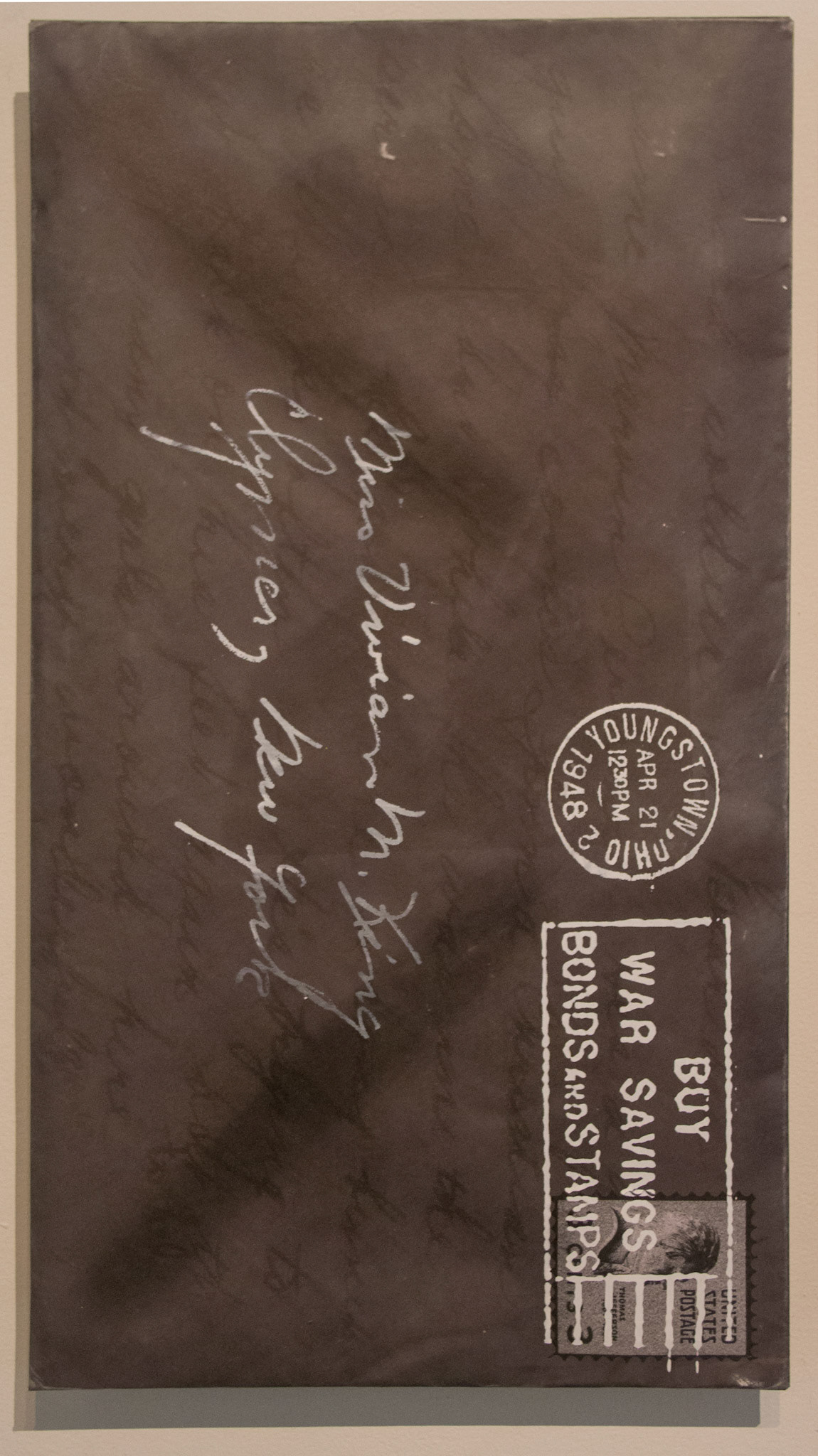
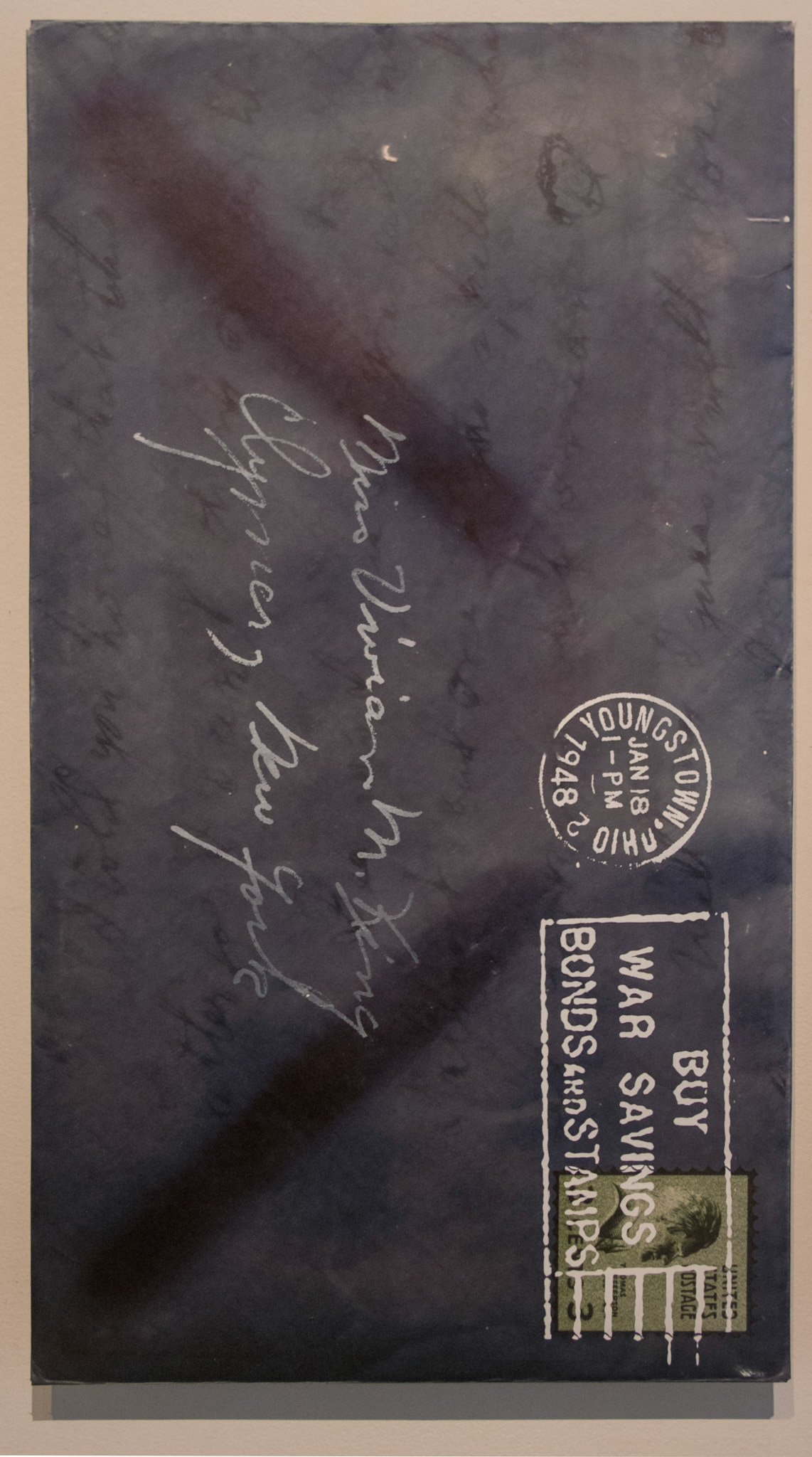
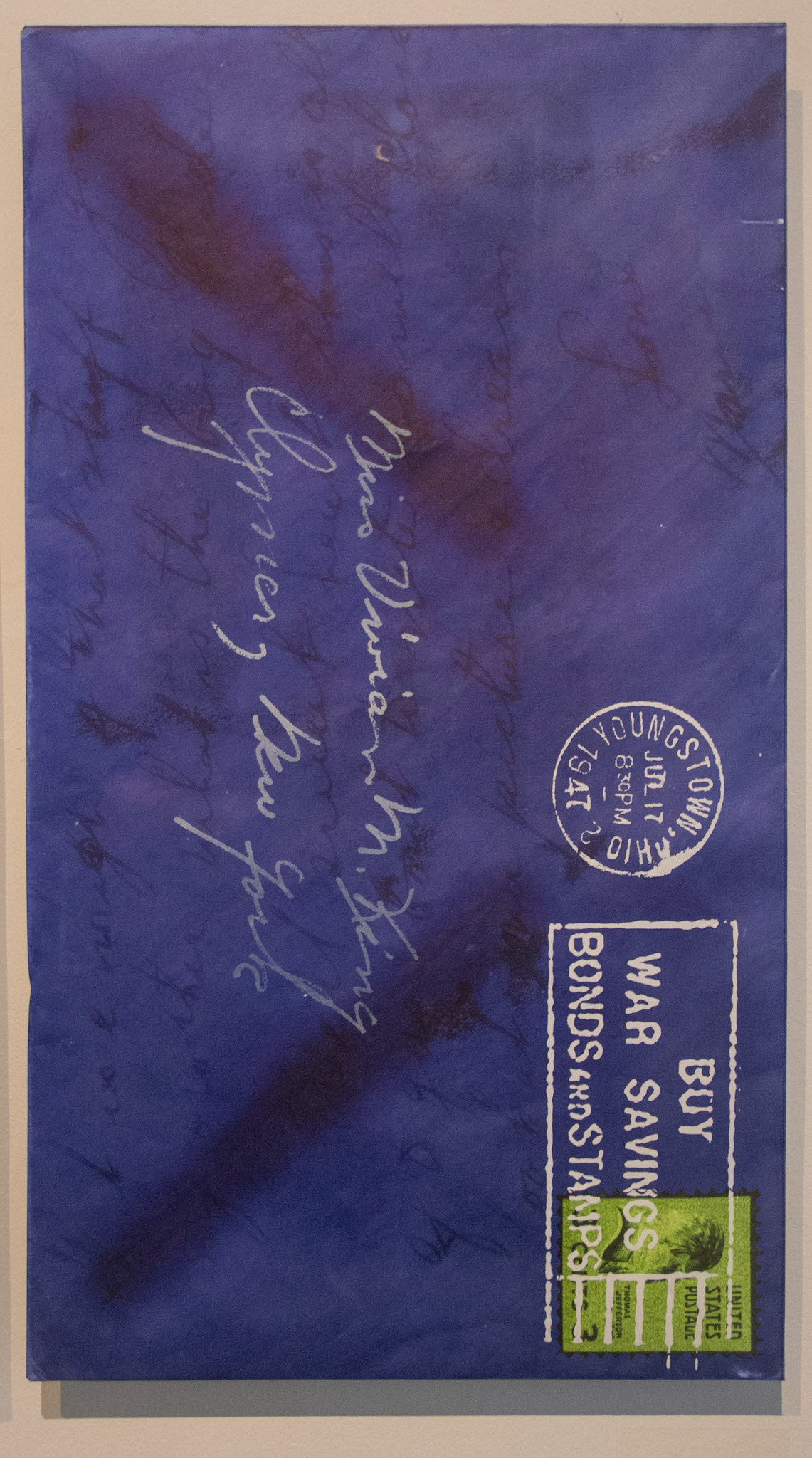
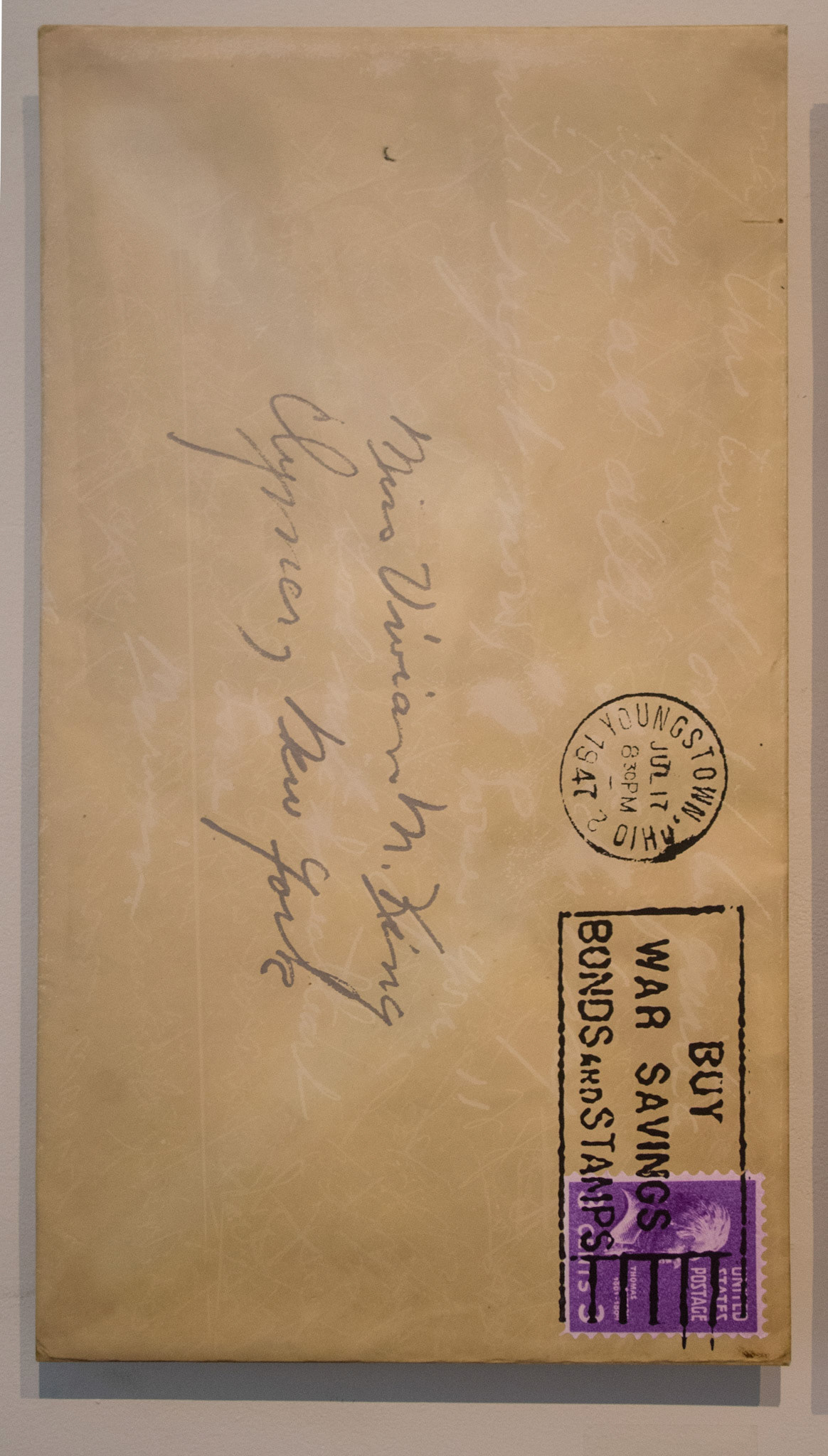
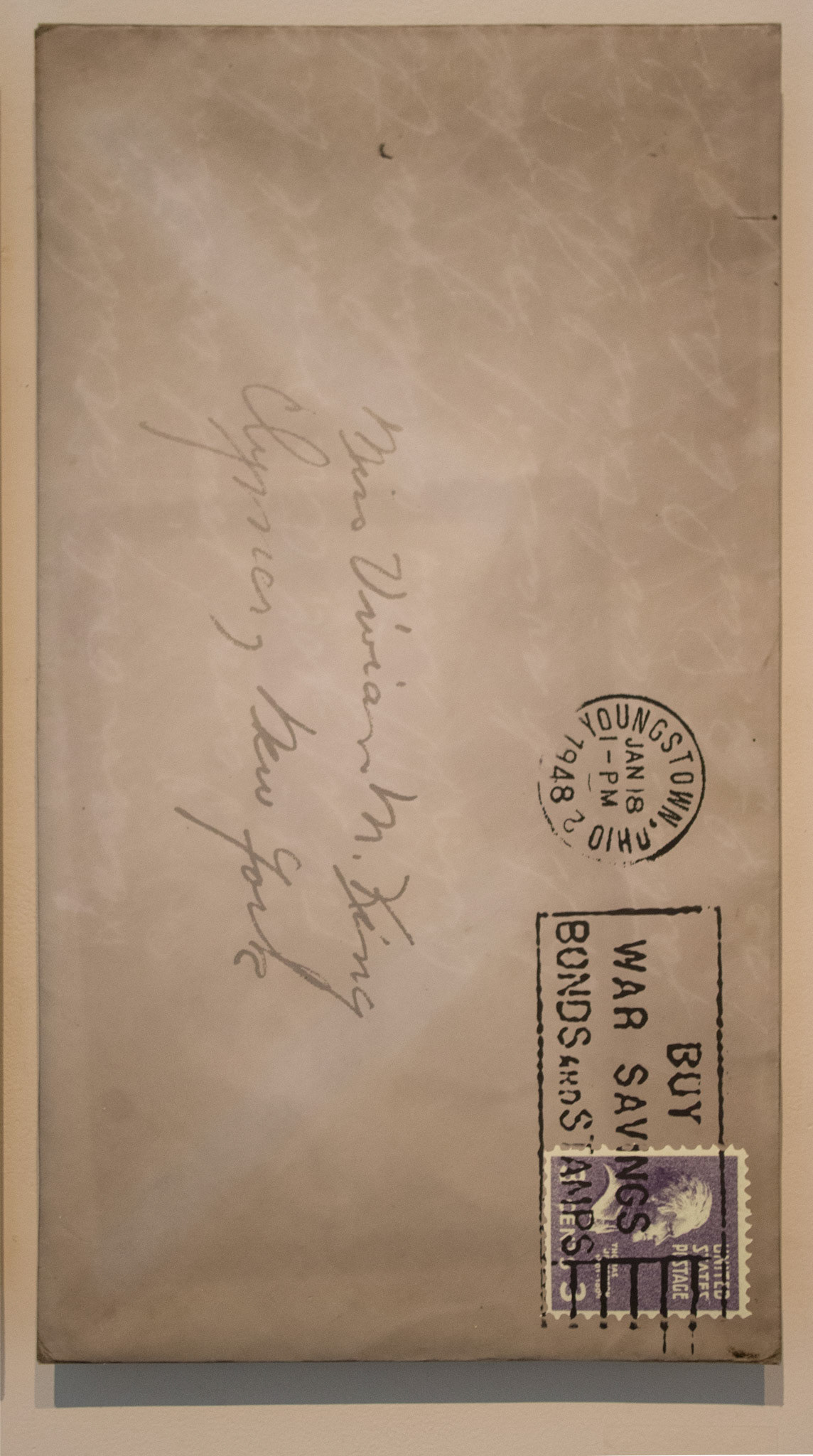
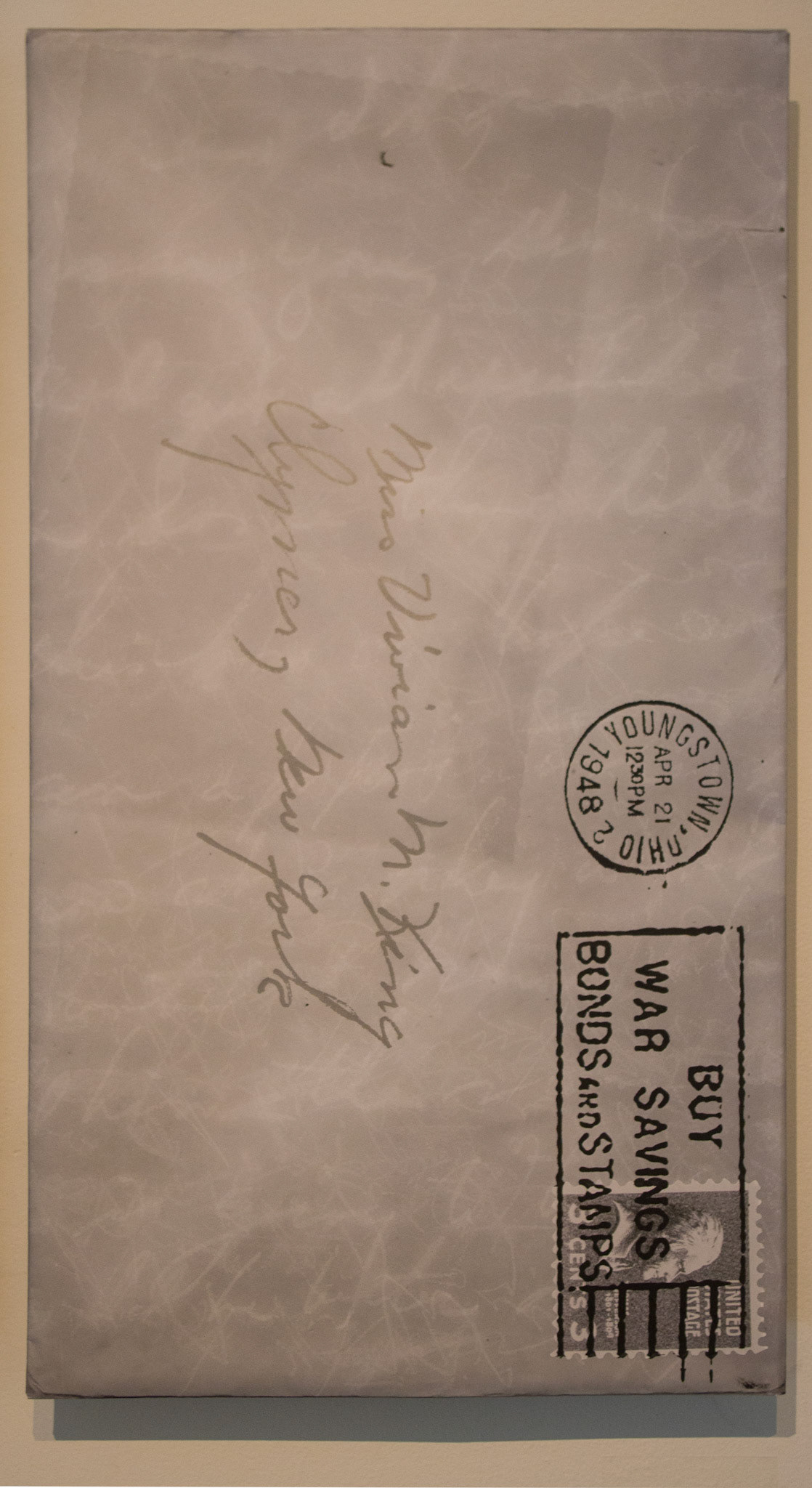
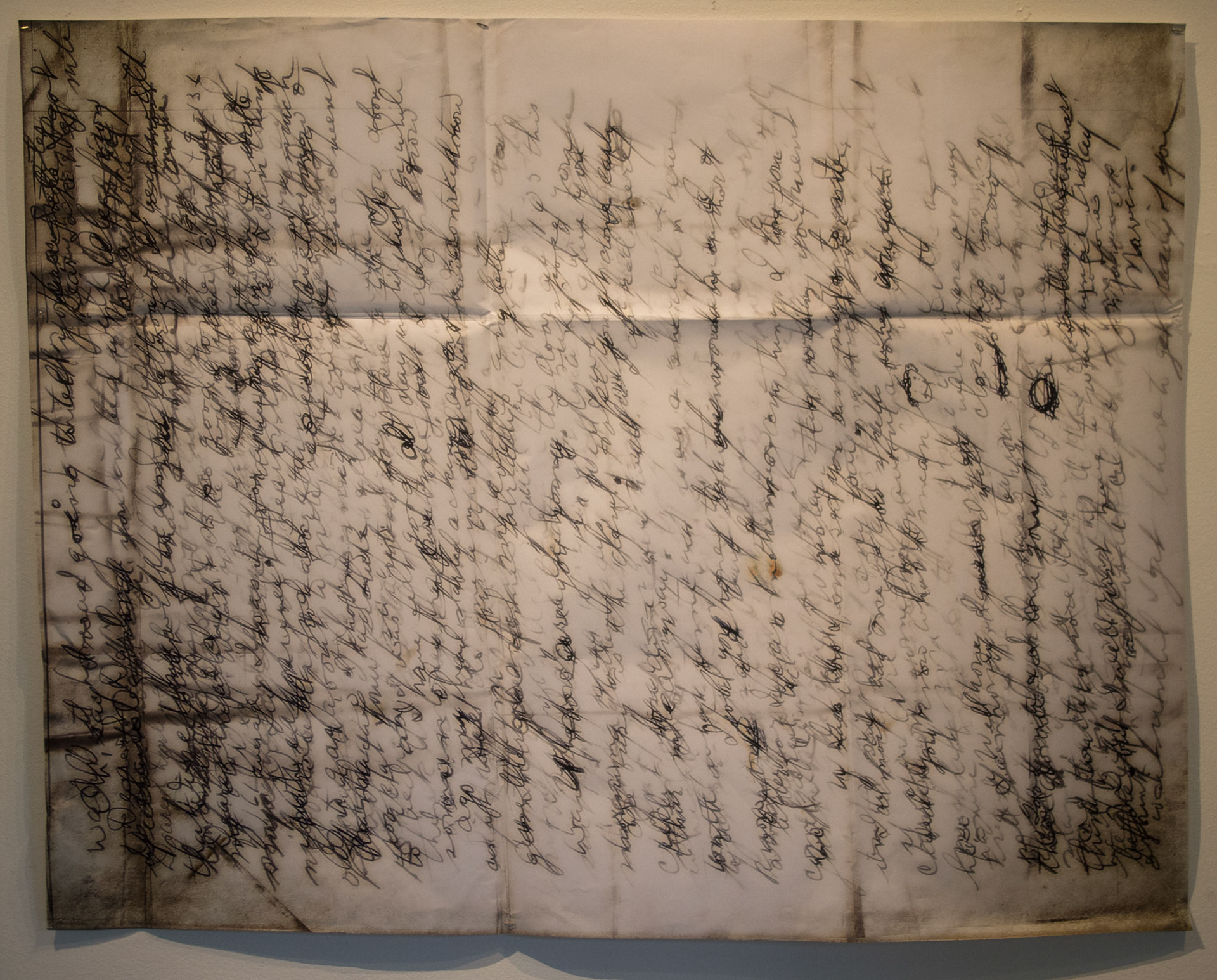

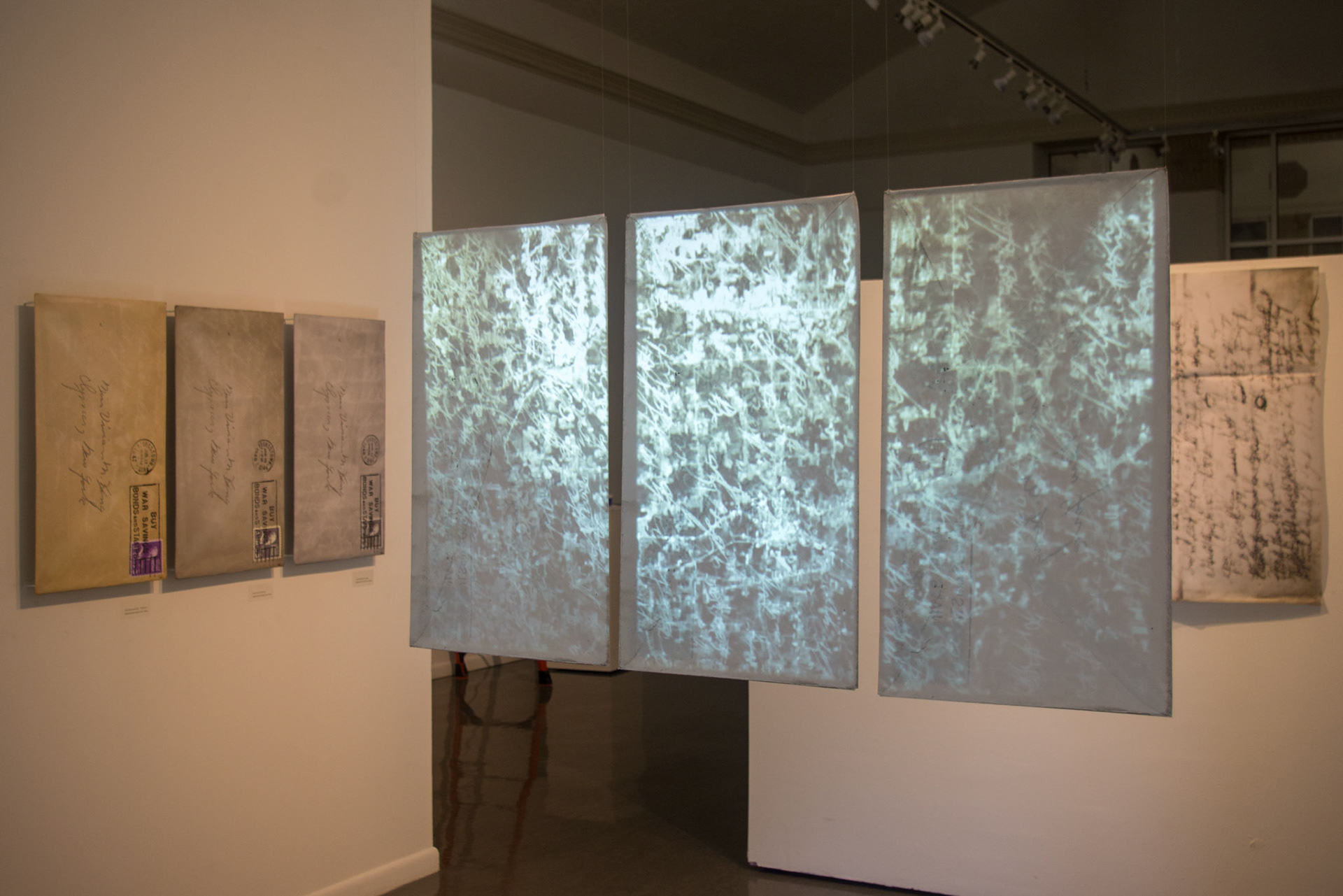
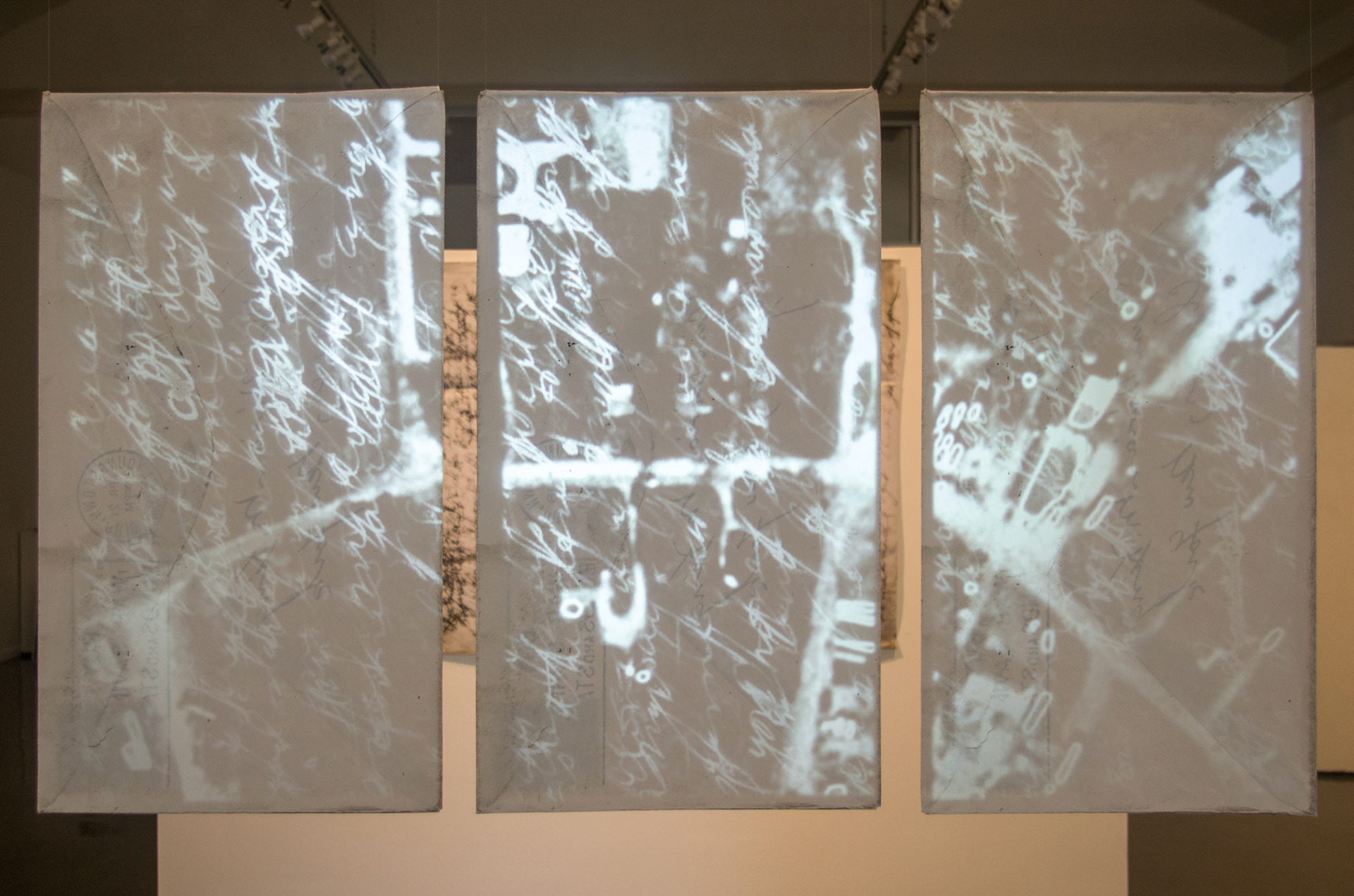
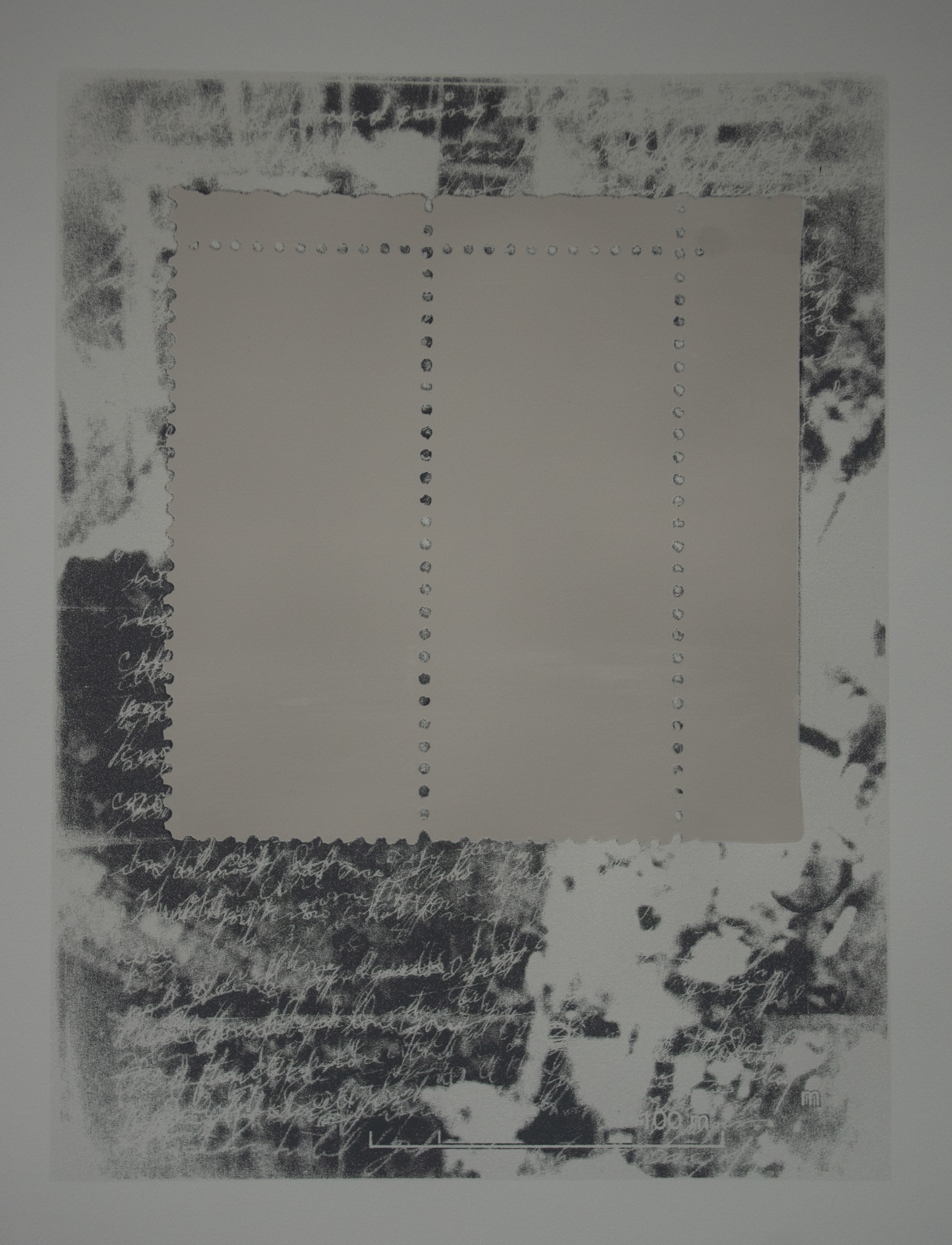
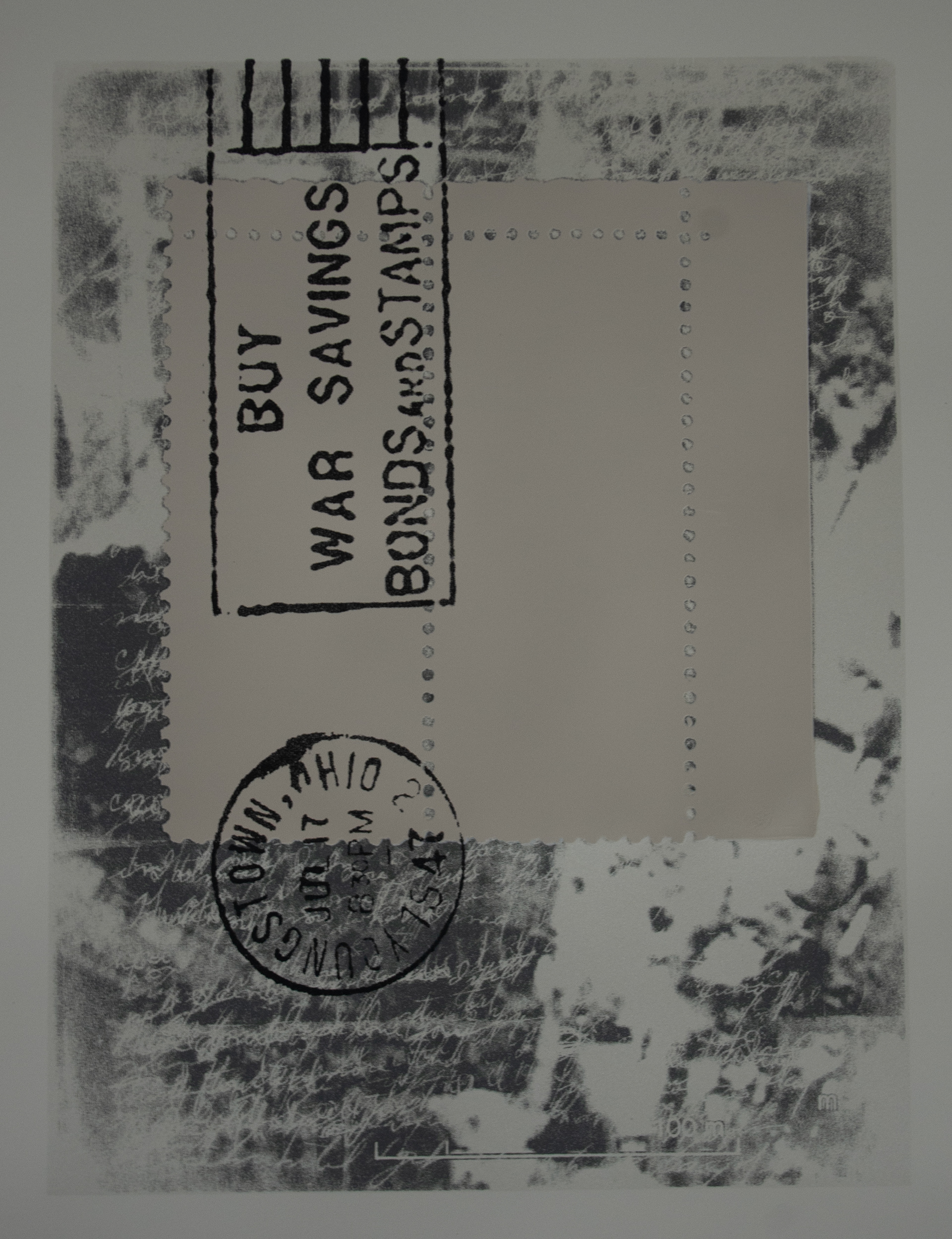
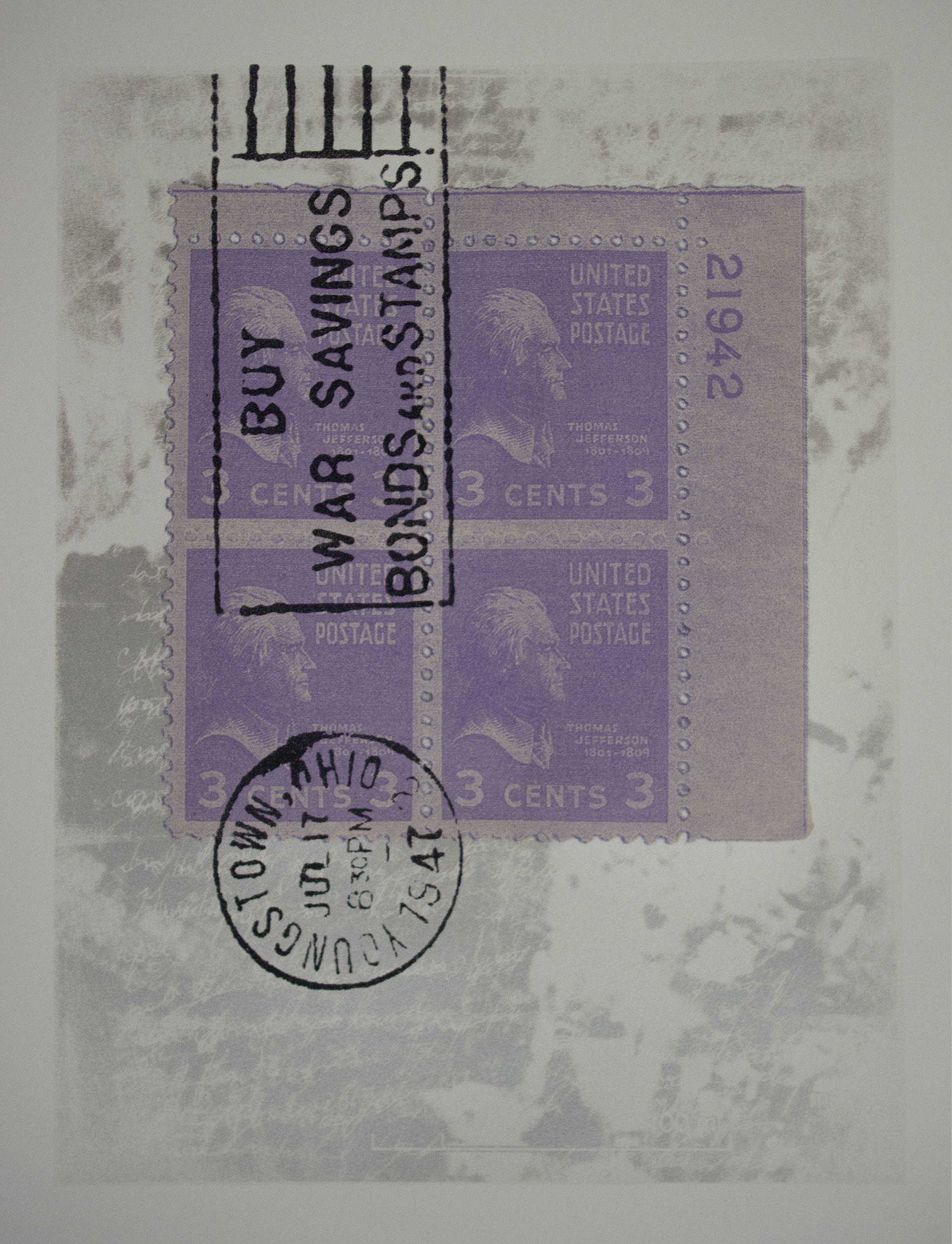
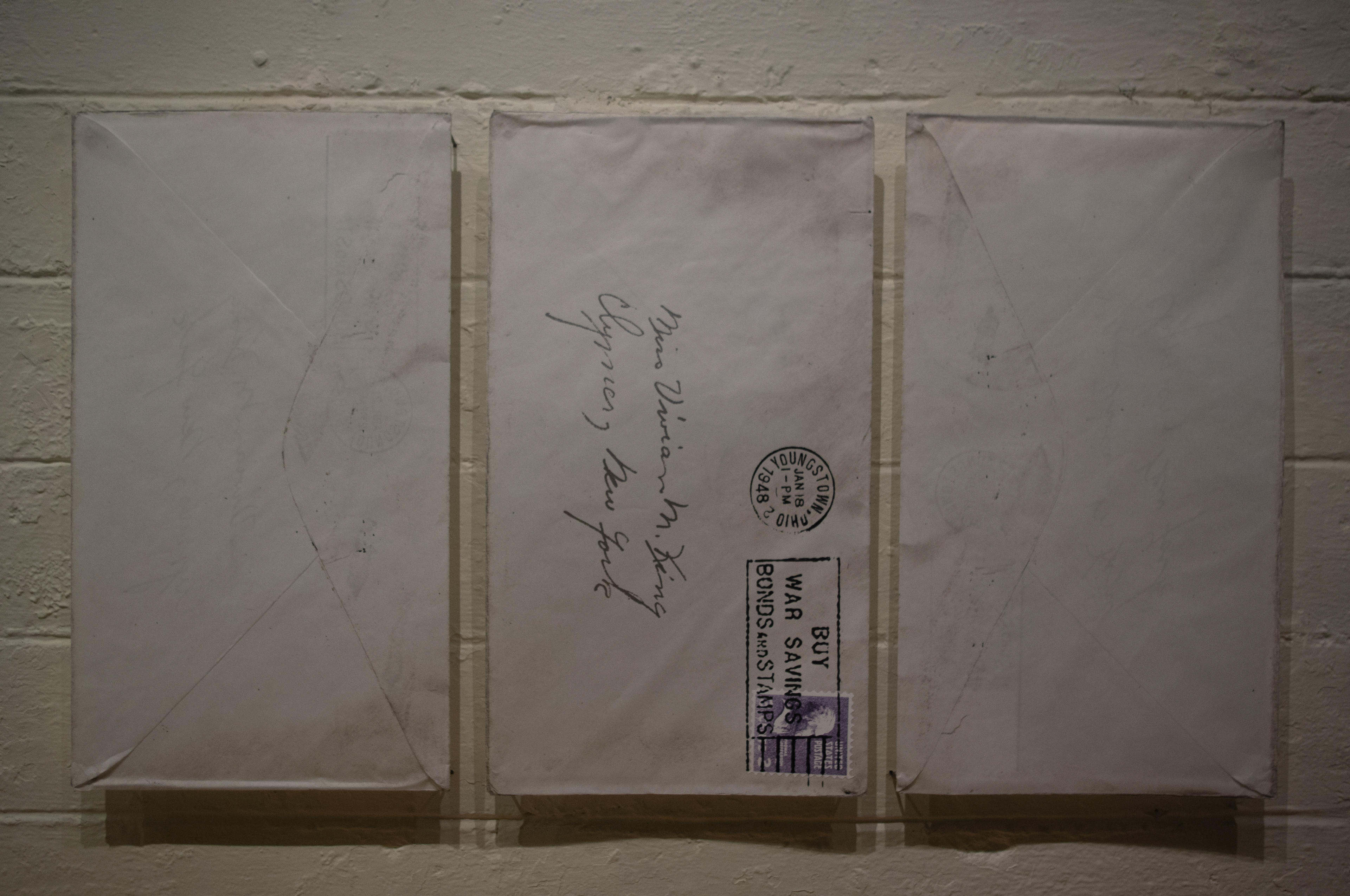
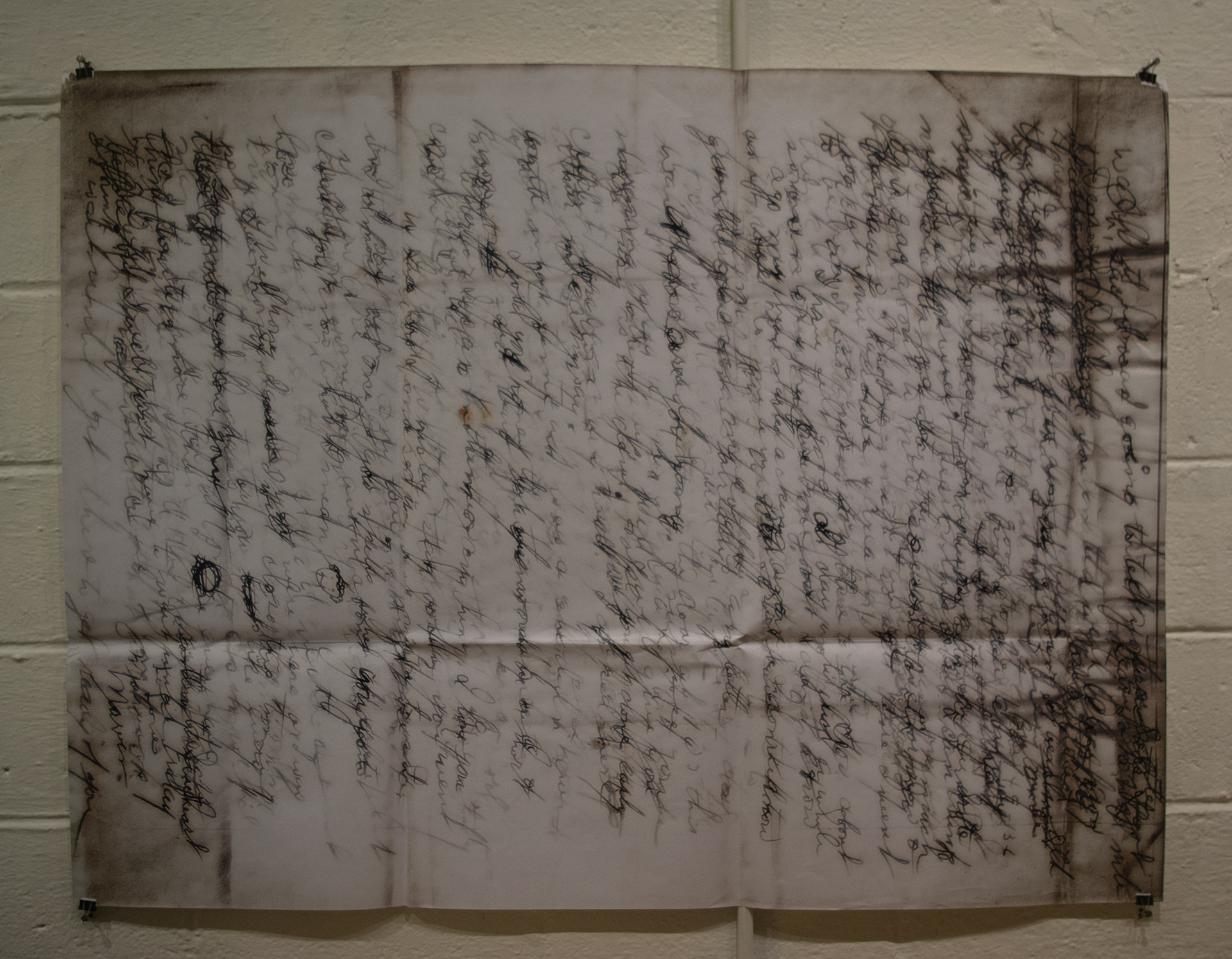
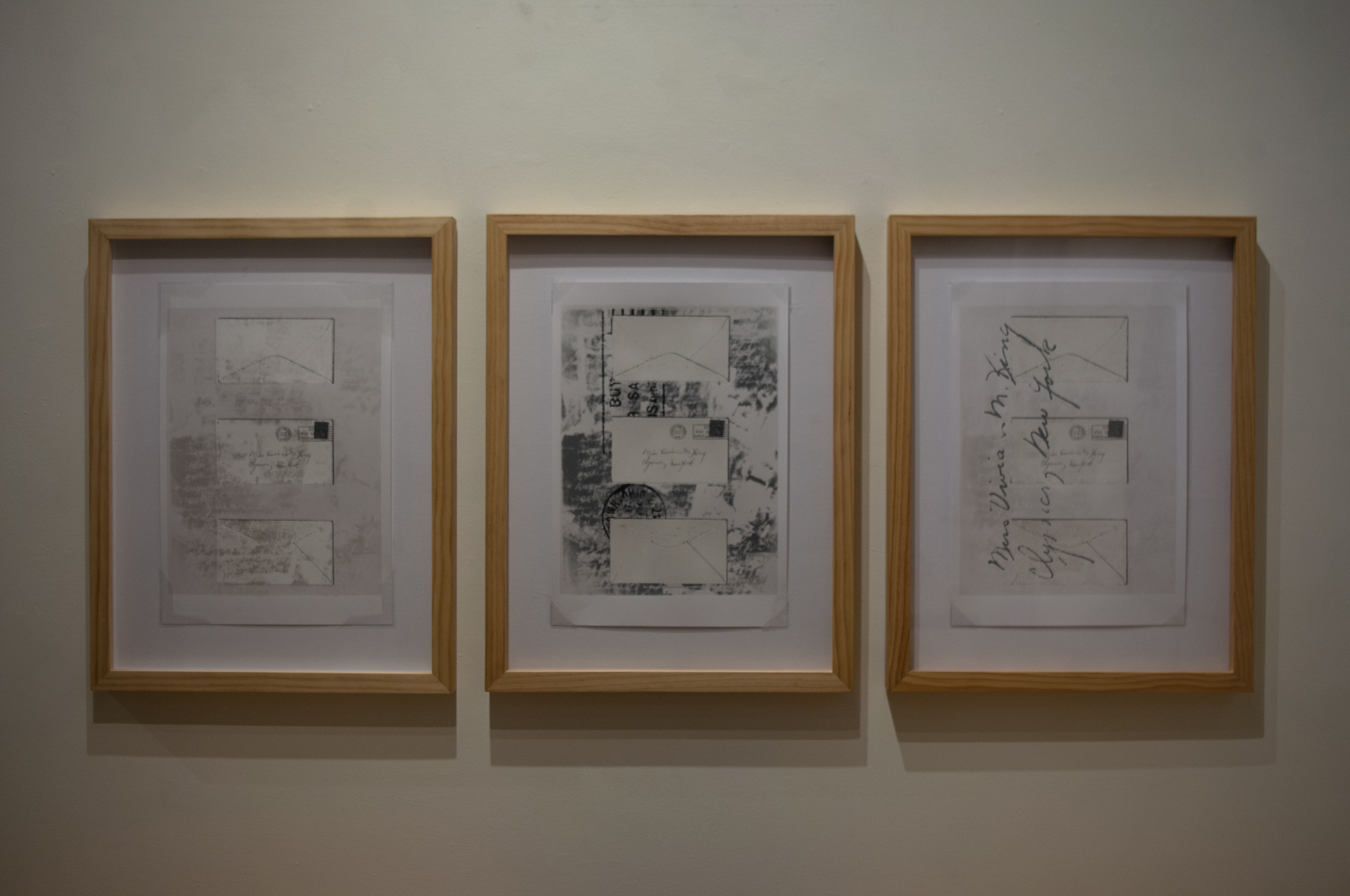
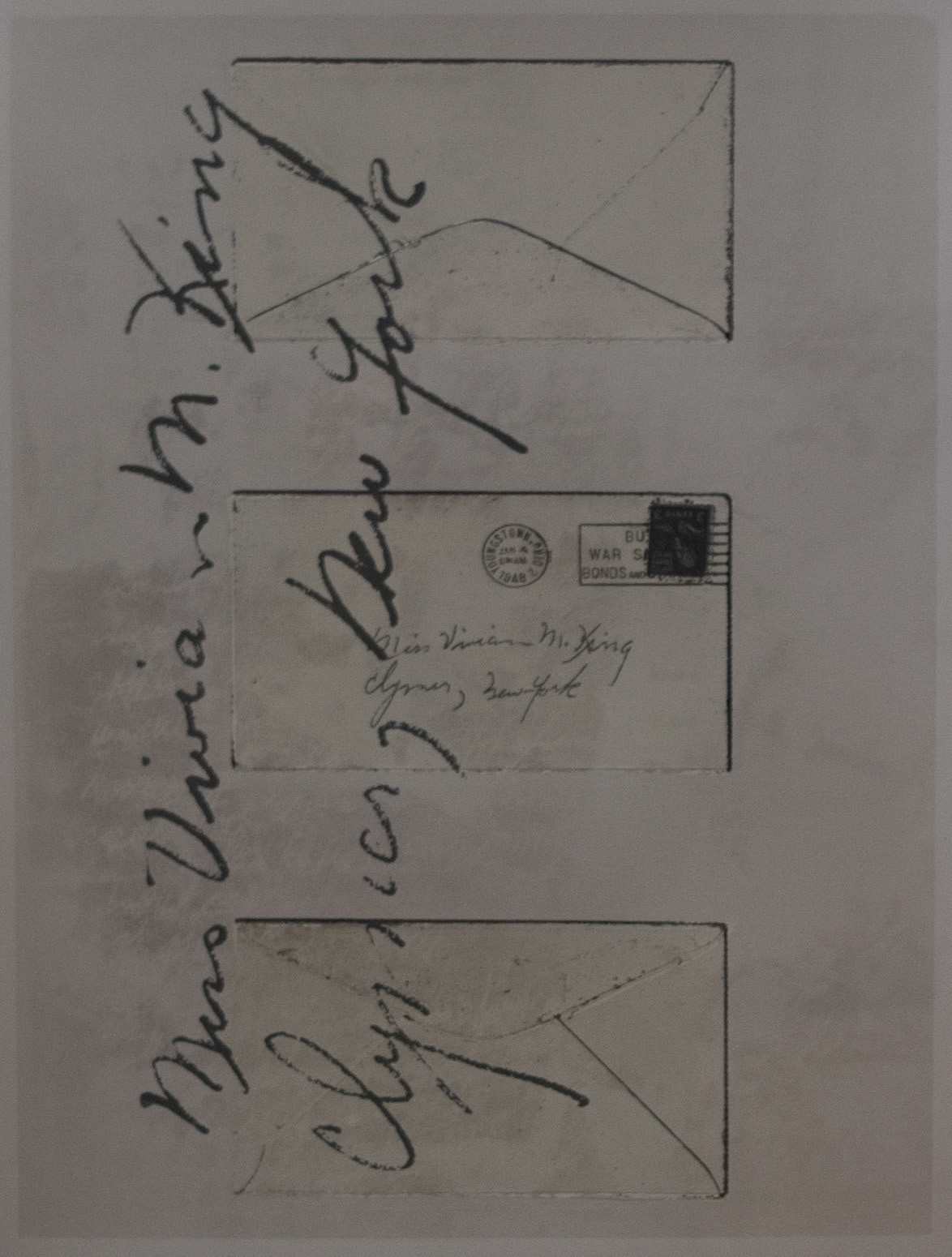
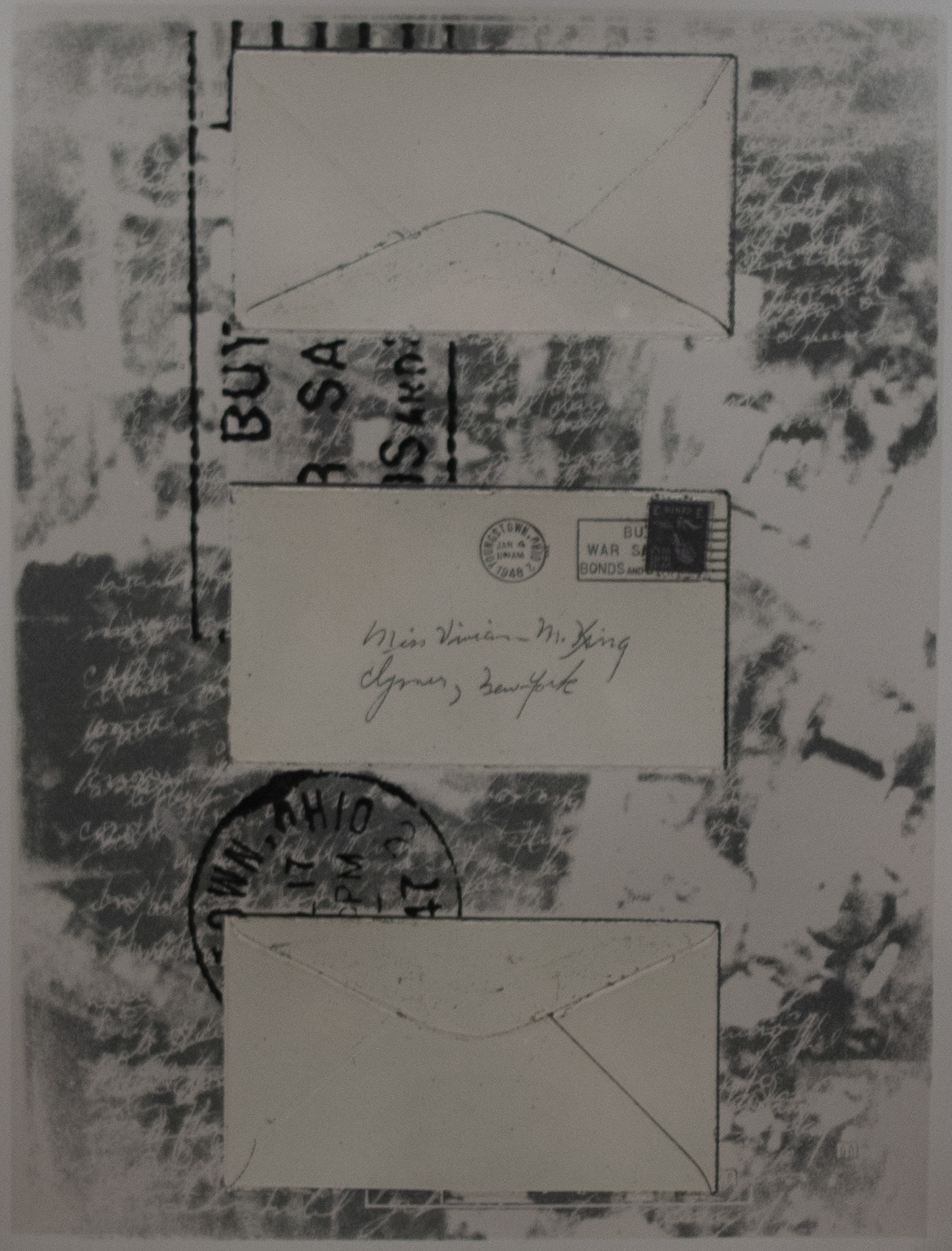
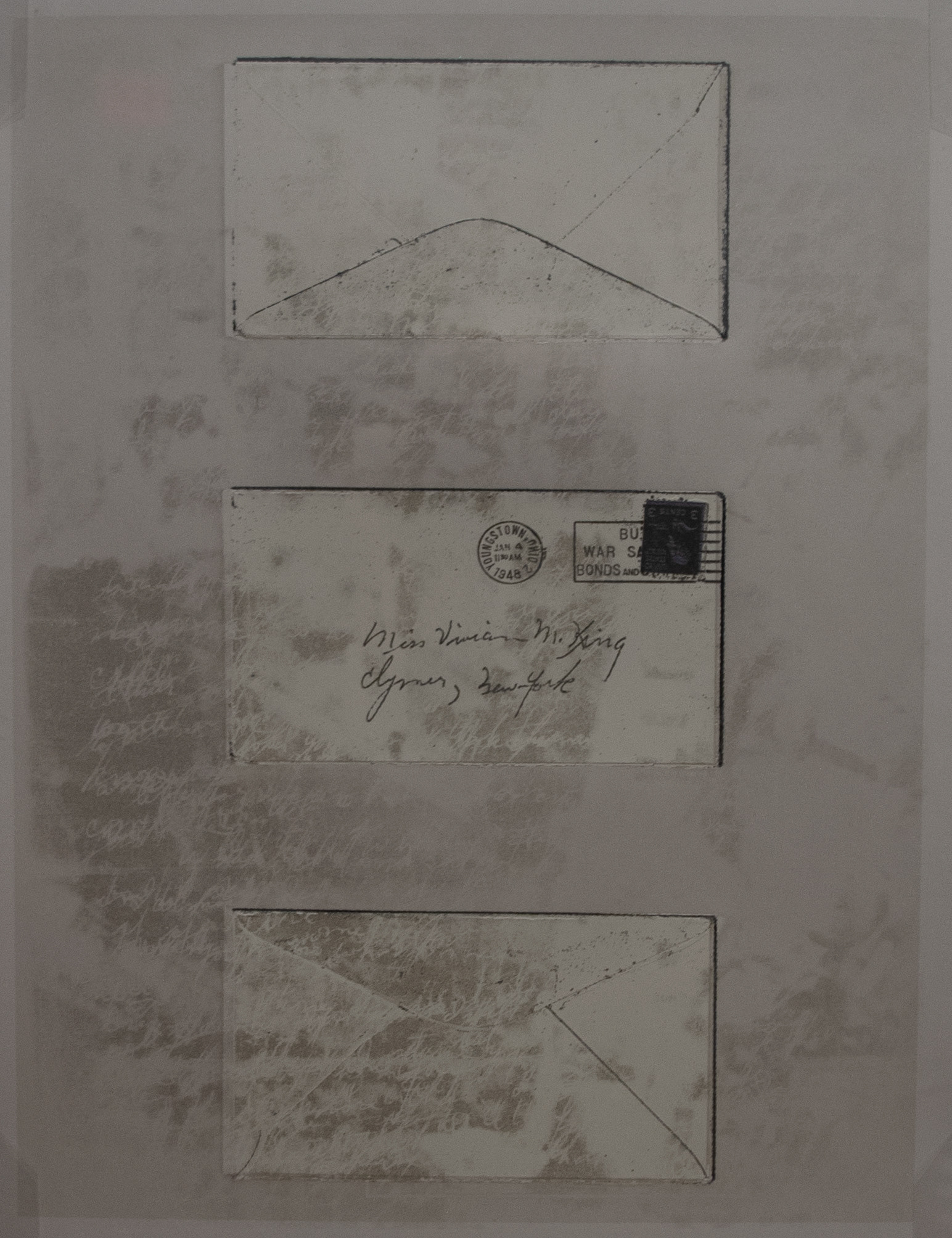
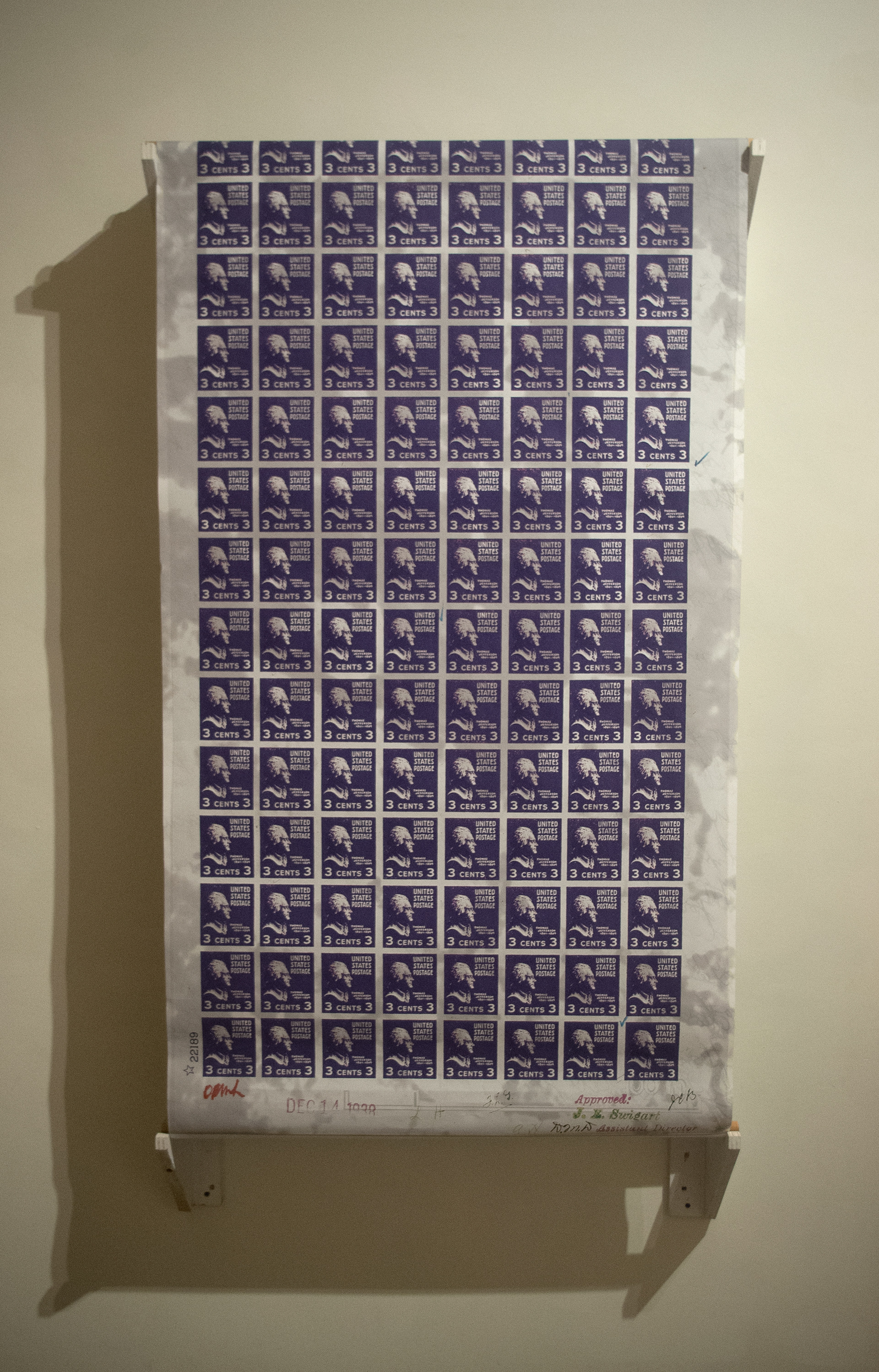
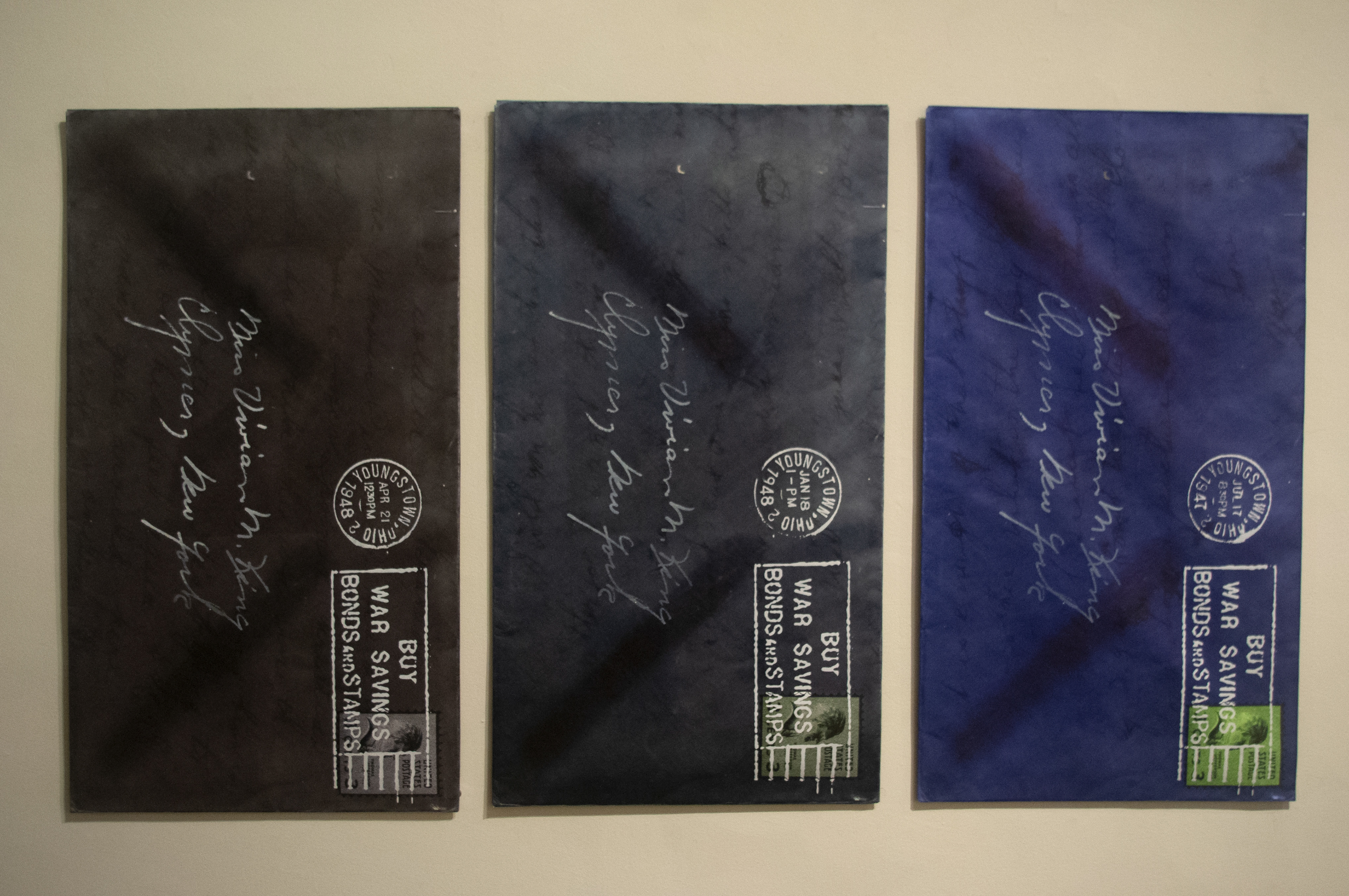
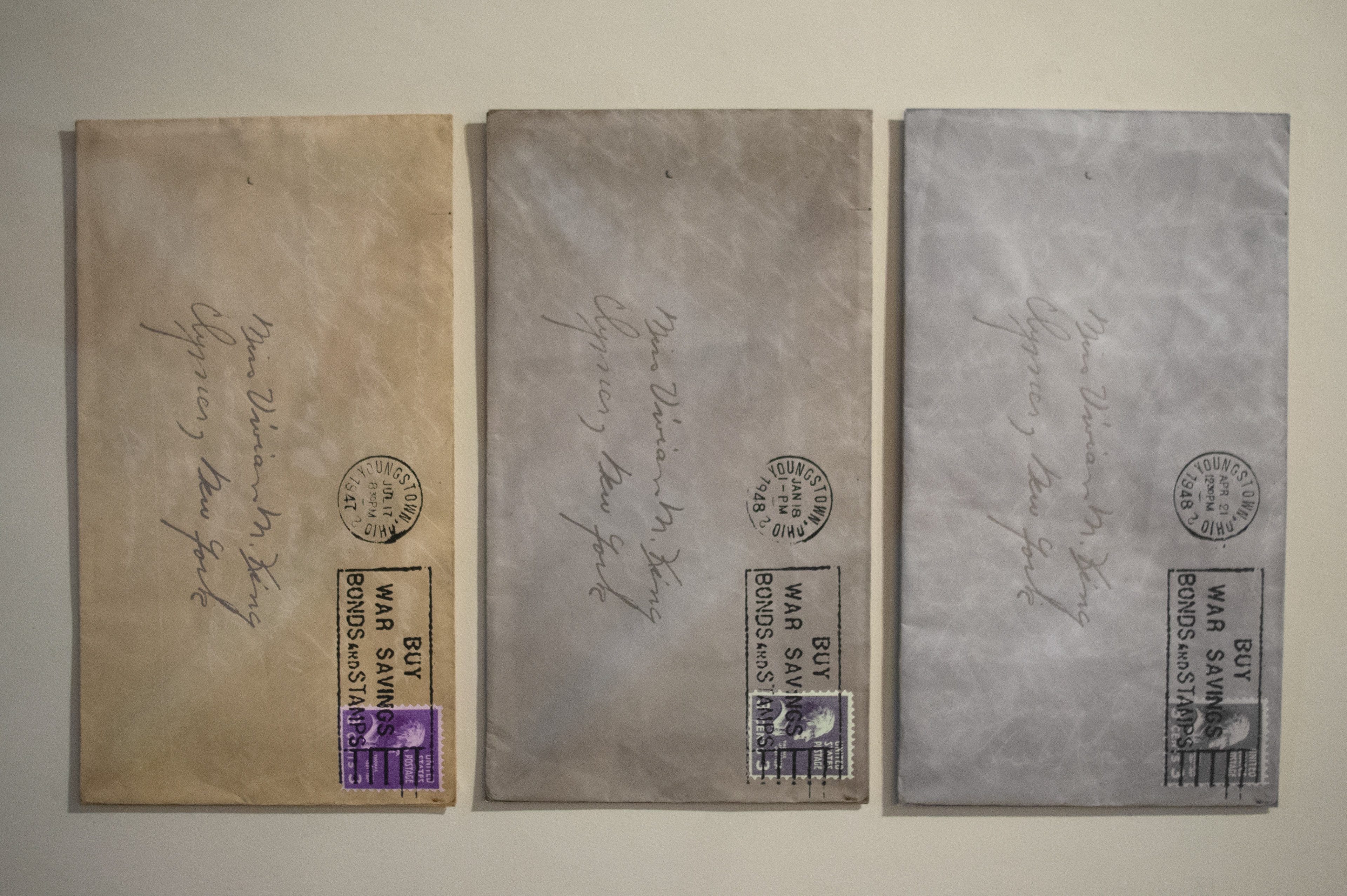
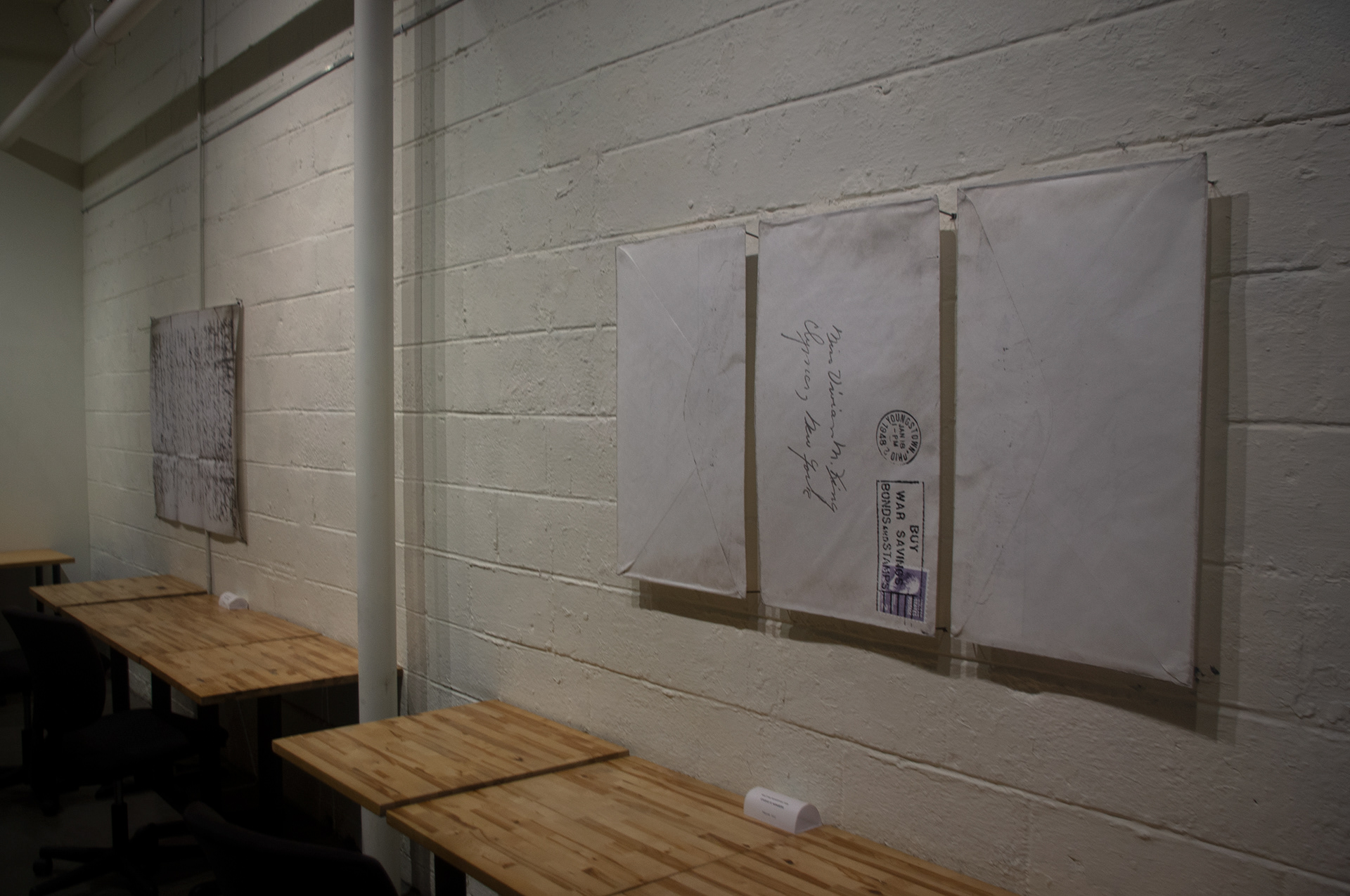

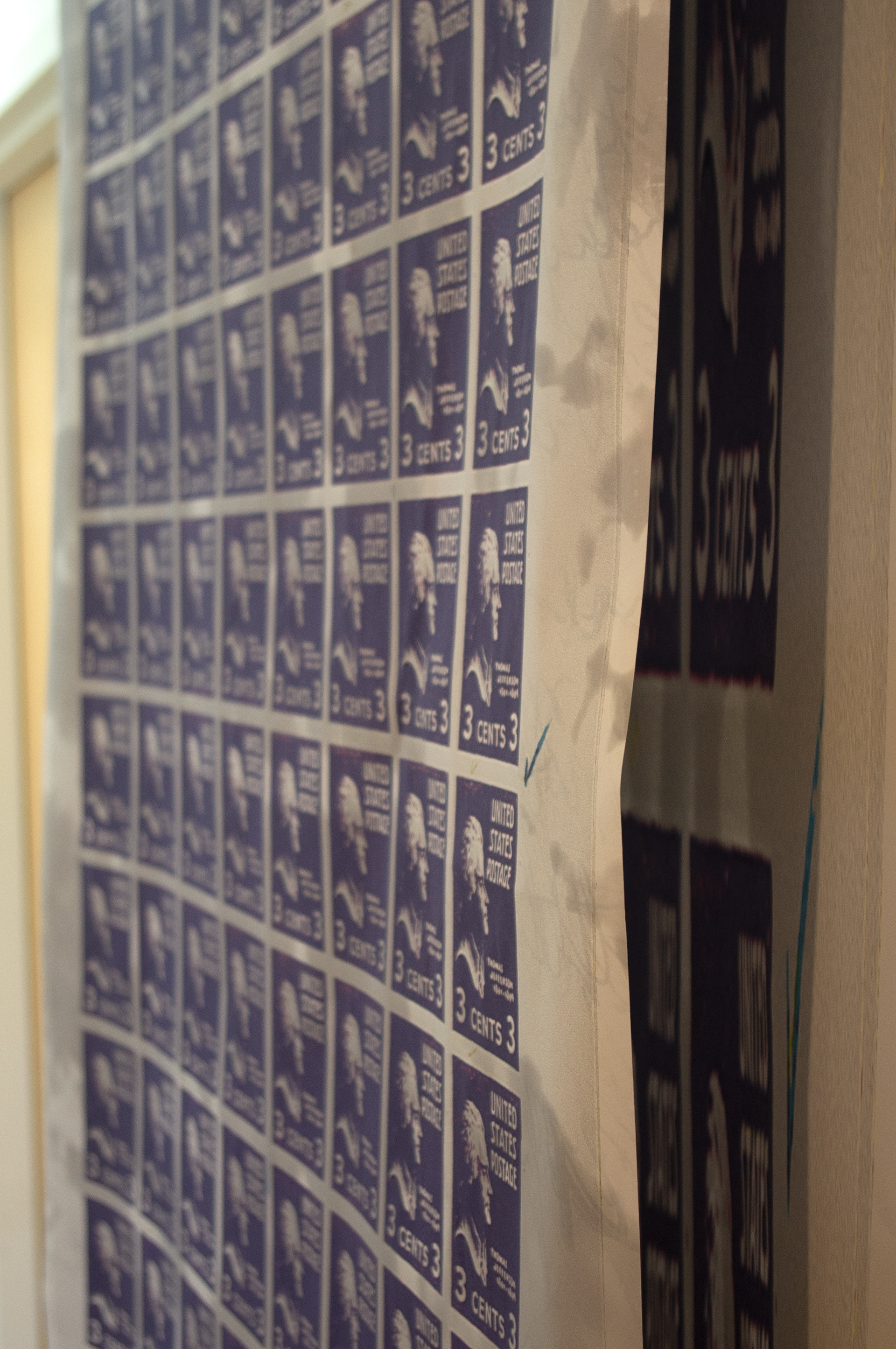
The envelope is of little significance…until it is filled and addressed. Digital disruption may relegate them to the junk pile, but as they are relied upon less, they come to carry more: a personal touch. Virginia Jackson, writing on Emily Dickinson, describes the written address as conjuring “a presence more intimate than a whisper.” Dickinson herself recorded poetry on envelope covers, exemplifying how the object becomes involved beyond utilitarian purpose. The envelope serves as a conduit…a connection to whom from which it came. In Letters to Vivian, the digital is a means of preservation rather than disruption. Archiving an ephemeral correspondence between a young couple during their courtship in the 1940s provides an opportunity to know people who have passed. The collection serves as source material for compositions that investigate the role of the object in their interactions. Enlarging the envelopes makes a memorial out of the mundane, while color and tonal manipulations explore turning the inside out. Variable silkscreen prints break down the object into its elements, searching for the source of its significance. These components layered over one other call for a closer look, through the opaqueness, to what is behind. If, to quote Virginia Woolf, life is a “semitransparent envelope surrounding us from the beginning of consciousness,” then the work carefully unfolds it to give the viewer a glimpse within, asking them how we, as well as the objects that represent us, are in the world.